Saturday, October 31, 2009

Happy Halloween

I was so busy shooting today I almost forgot to wish everyone a Happy Halloween.

Friday, October 30, 2009

Do My Bidding

Sunburned GSP #144 © Chris McCaw
Just a few more days to bid on the impressive photographs in the Aperture Foundation auction.

The live auction includes works by Matthew Pillsbury, Diane, Arbus, Joel Meyerowitz and Abelardo Morell.

The silent auction promises even more great work by Chris McCaw, Jane Hammond, Trevor Paglen, Phillip Toledano and yours truly.

Wednesday, October 28, 2009

Must See Shows

My Mother's Scar © Doug Dubois
I'm really looking forward to two openings Thursday night. Doug Dubois' ...all the days and nights at Higher Pictures and Phil Toledano's America: The Gift Shop at Hous Projects.

In advance of his show, I spoke with Phil about the project and one of my favorite pieces in the show, the Abu Ghraib bobblehead. It's based on the all too familiar image of a man being mock electrocuted as he stands Christlike and hooded.


Phil first approached a US company to make the pieces. An employee with limited knowledge of news and popular culture initially took the bobblehead order, but Phil got a quick call back from the company saying there wasn't a chance in hell. Phil then sent the Abu Ghraib images to a manufacturer in Shenzen, China who created the pieces based solely on the original photographs. Below is the original image and an early prototype for the bobblehead.


I asked Phil, why a bobblehead and he said "I suppose it was the most logical because it was the only 'figure' in the project, plus, it was one of the most iconic images of the war...It was the Iraq war's 'naked girl running down the road after being napalmed."

Here are the details on these two shows:

Doug Dubois | ...all the days and nights
October 29-December 5, 2009
Higher Pictures
764 Madison Avenue
New York, NY
Opening: October 29, 2009, 6-8pm

Phillip Toledano | America the Gift Shop
October 29 - December 19, 2009
Hous Projects
31 Howard Street, 2nd floor
New York, NY
Opening: October 29, 2009, 6-8pm

Wednesday, October 21, 2009

Something's Happening in DUMBO

Dina © Phillip Toldedano
There's a lot of good energy in Dumbo this season. And much of it is centered around 111 Front Street. New galleries have opened and existing galleries are deepening their programs. There's a lot of interesting and diverse photography on view.

Here are some highlights from the next few weeks:

October 16
Winter, Alton, Illinois © Jo Ann Walters
Of Land
Featuring the work of Lois Conner, Laura McPhee and Jo Ann Walters (a huge photographic hero of mine).
Kris Graves Projects
Suite 224

October 22
UNSEEN: A Photographers Salon
The always fabulous Ruben Natal-San Miguel curates a show of some of his favorites (and mine) including Phillip Toldedano, Richard Renaldi and fellow SVA alum Ryan Pfluger.
Randall Scott Gallery
Suite 204

November 5
DreamBoats
Images from the new photographer's collective featuring Adam Golfer, Daniel Shea, Joe Levenworth and TJ Proechel
Umbrage Editions
Suite 208

Foreign Body
Antony Crossfield
Klompching Gallery
Suite 206

Monday, October 19, 2009

Surface Tension Thesis Show

© Jaime Permuth
This Wednesday will see me at the opening of my SVA student's thesis show. The students have worked long and hard over the past year and now they get to strut their stuff. Old friend and all around sweetheart Dan Halm has curated a thought provoking show.

Here are the details:
Surface Tension
An exhibition of thesis work from the 2009 graduating class of the
MPS Digital Photography Department at the School of Visual Arts.

October 21 to November 14
SVA Gallery
209 East 23 Street
New York, NY

Opening Reception: Wednesday, October 21, 6 to 8 pm

Foreclosure: Death of the American Dream

Lauren Greenfield continues to push further into the new media realm mixing still photography and video for this piece on the foreclosure crisis. From Frank Evers.

Sunday, October 18, 2009

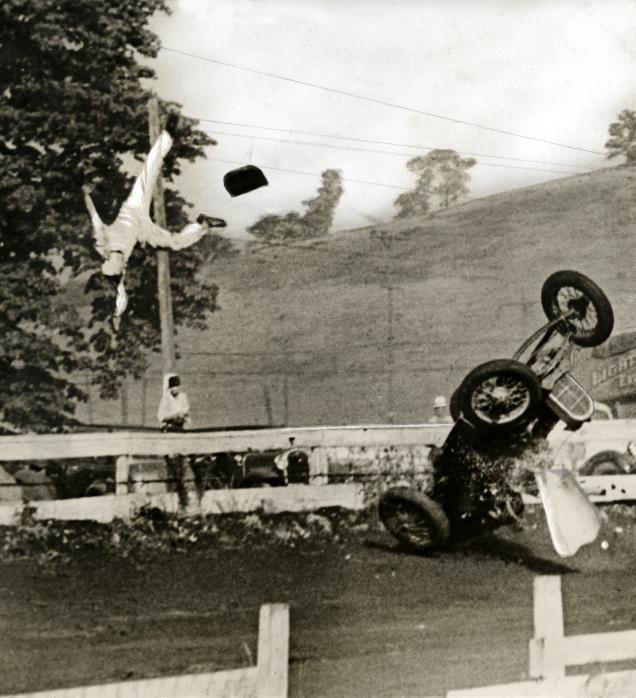
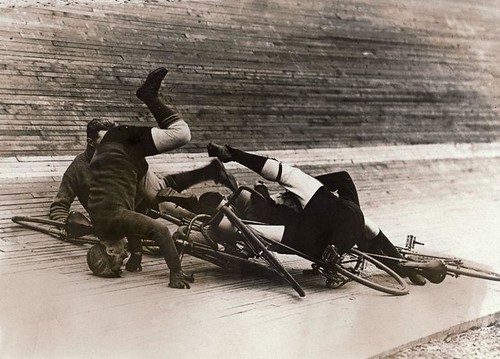
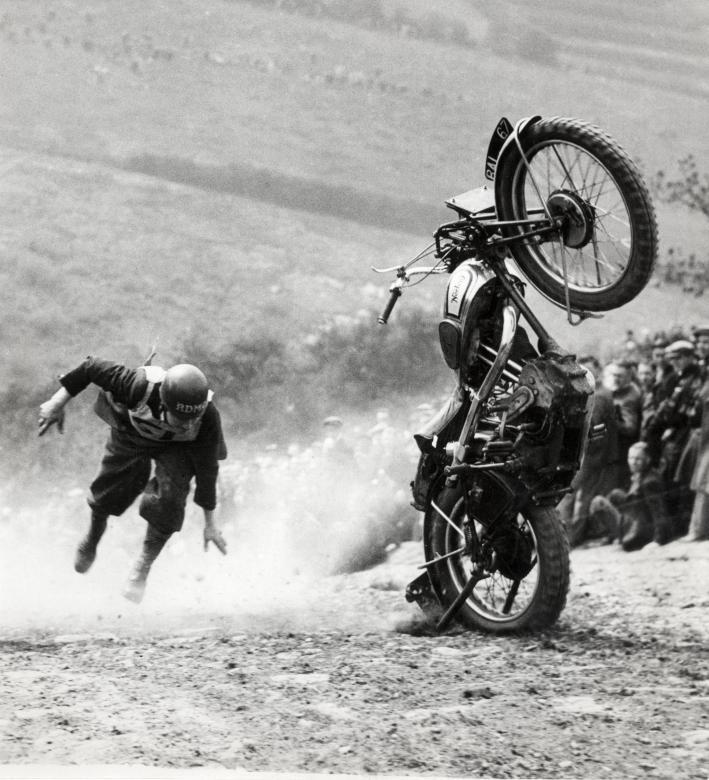
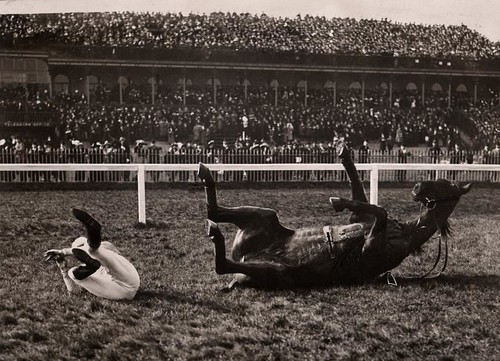
Dutch Accidents

Accident photos from the Nationaal Archief's photostream on Flickr.


Saturday, October 17, 2009

Eames Polaroid Promotional Film

Promotional film for the Polaroid SX-70 made by Charles and Ray Eames.

Thursday, October 15, 2009

Discover: Vivian Maier

© Vivian Maier

John Maloof recently purchased more than 40,000 mostly medium format negatives at an auction for items from an unpaid storage locker. He soon discovered he had found the life's work of a hereto unknown Chicago street photographer name Vivian Maier. The work spans most of the 1950s to the 1970s. Vivian passed away on April 22, 2009. Her photographs are some of the more accomplished street images I have seen and deserve attention. You can see more of here work on John Maloof's Vivian Maier blog.
© Vivian Maier

© Vivian Maier

© Vivian Maier

© Vivian Maier

© Vivian Maier


Thanks to Chriss Pagani for sending the link my way.

Tuesday, October 13, 2009

A Response to Pieter Hugo's Photographs

A little over a week ago I posted images from Pieter Hugo's newest series Nollywood. Almost immediately I received a very considered email from Sebastien Boncy who took issue with the work. I've always thought Pieter was an amazing portraitist (I own one of his prints), but his work suggests a dialogue with the countries and peoples he captures that, as an American, I am not privy to. In the spirit of opening that dialogue to debate, I asked Mr. Boncy to write a response to Pieter Hugo's photographs. The full, unedited text of his response is posted below. Comments are welcomed and encouraged.


White People Are Looking At You
by Sebastien Boncy

Mallam Mantari Lamal with Mainasara, Nigeria 2005 © Pieter Hugo
Pieter Hugo’s images (I’m speaking specifically of The Hyena and Other Men and Nollywood) make me uncomfortable: weird, highly stylized, meticulously crafted images of crazy looking niggers doing crazy looking shit. Hold on, let me check myself before this dissolves into an ugly, useless attack. Let’s give Hugo the benefit of the doubt. Let’s take it for granted that Pieter Hugo is a talented and conscientious photographer and assume he has not a racist bone in his body. Somehow, that isn’t enough and I’m still disturbed.

Maybe it has something to do with the way Hugo and his defenders are so quick to dismiss or minimize concerns about the racial context that this work travels in. Hugo himself denies any claims of othering black Africans and turns the table on his accusers by calling them "condescending" "white liberals" that deny his subjects any real agency in the fabrication of these images, but we know that permission during process does not mean control or even approval over the final product. Larry Clark and Diane Arbus had permission, yet the ethics of their work is always front and center of any serious discussion about their legacy. It is not just about what goes into the work, it is also important to consider where it’s headed, where it comes from and who’s doing the buying.

Hugo is worldwide. He has a gallery in South Africa, one in the USA, one in Italy, and one in the Netherlands. None of those countries are known for their happy, well-integrated black populations. The people sipping wine and spending money at most Hugo openings are highly unlikely to have any significant knowledge of Nigeria or even first-hand knowledge of being part of the black-beans-for-dinner-three-nights-in-a-row club. And these pictures do not offer any sort of education for one unfamiliar with Nigeria. Now in a Nigerian gallery or magazine these would be very different images: the audience would be able to decipher and discuss the references, the meanings of the fictions and icons that are specific to Nigerian lives, Nigerian economies, Nigerian histories, Nigerian religions. What is an Italian aristocrat thinking when confronted with a moolignon Vader with his dick out? I think it is beautiful that Hugo trusts the audience to come up with complex and insightful conclusions, but I also think it is naive if he thinks he can just toss these photographs at societies that continue to oppress their black populations and not expect negative readings of race to stick to or be amplified by the work.

Azuka Adindu. Enugu, Nigeria, 2008 © Pieter Hugo
In her essay for Nollywood, Stacy Hardy hits up against the wall of inequity early. It is interesting to look at how she circumvents it. Hardy offers up a reading of Nollywood that claims that the work speaks of transgression and the disintegration of barriers and so invests its subject with strong sexy magic that will rewire Western minds (These niggers are meant to scare us out of or cultural and intellectual torpor). She invokes the vampire myth as the organizing principle for her arguments. Vampires are for Victorian sensibilities. I am from a culture that shares many similarities with Nigeria (Haiti) and the vampire holds little cultural significance in a society where the same barriers are so fluid. The Victorian conjures up the Vampire as a tool, as a weapon against the moribund strictures of his own culture. But Nigeria is not conjured up, it is not immaterial invention, and it is not for the Victorian. Transposed to other images of black bodies in white media Hardy’s reading would pretty much explain black-stud-white-chick porno as another strong political statement when we all know that the charge from those films come from the regimented, carefully controlled illusion of taboo breaking: the white viewer and producer are still in control no matter how many Jennas and Taylors make the acquaintance of Lexington Steele’s superlative member.

Korewah group, aboriginal, Chota Nagpoor from The People of India
Hugo’s images are not coded in a way to upend or question Western conventions because there is nothing pictorially or narratively challenging or dissonant here. These images feel very familiar to me. I spent a bit of time looking and discussing colonial photography (mostly the British in India) in the second half of last year, and I am getting flashbacks to The People of India Edited by J. Forbes Watson and John William Kaye for the Viceroy of India. Many of the compositional tropes started by the photographers of the East India Company and refined during the British rule of India were developed to present the Indian as specimen, to fix him in trade roles and a past glory without the Western ideal of individuality. Those same techniques and attitudes are buried deep in much of today’s documentary and journalistic photography. This is why we have someone like Simon Norfolk working so hard to rewrite the rulebook on documentary work. It is possible that Hugo is using these archaic tropes in a subversive manner, but I am not seeing it and I have yet to see a sensible argument that would separate something like The Hyena and Other Men from this noxious canon. Hugo says that we are supposed to ask questions about Nigeria’s distribution of wealth and the situations that would force men to such strange dangerous livelihoods. But I don’t know how to read wealth in Nigeria in a visual sense, I don’t see the community that these men are from or where they work, I have no idea how the rest of Nigeria looks upon their activities. Most of my assumptions would be probably useless and Hugo’s photographs do not inform or explain.

This is not about Hugo really. It’s about the necessity for dialogue about issues of race. It’s about remembering that systematic racism is hidden in every aspect of our contemporary lives and it is very disturbing for any concerned marginalized out there when people are too quick to close down that avenue of discussion. Finally it is about the unpredictable lives of images and how good intentions are often the least of all factors.

Monday, October 12, 2009

Enter the Bubble Chamber

A classic example of a pimue decay
I have been very fascinated with bubble chamber photography lately. These photographic images capture short-lived reactions of electrically-charged particles moving through a chamber of superheated liquid. The resulting images offer a variety of straight lines, spirals, and curves that share a similarity to shapes humans seem predisposed to draw and enjoy. These shapes have been been part of our expressive output from the earliest cave drawings to the doodles of your average worker suffering through a long office meeting. They are also seen in the work of Roger Ballen and Wassily Kandinsky among others.

Chamber of Enigma © Roger Ballen

Composition VIII, Wassily Kandinsky
As a lover of film and vinyl records, bubble chamber photographs also hold a certain old school charm as they have been largely replaced with more modern particle detectors that use a variety of electronic readouts to track particle paths.

One final bubble chamber tidbit. A bubble chamber photograph was used for the US cover of The Stroke's debut album, Is This It.

Sunday, October 04, 2009

Michael Schmelling Mails It In

There were so many wonderful things at this year's NY Art Book Fair that I'm kind of glad they didn't take credit cards. My favorite purchase was an envelope of Michael Schmelling prints he mailed to J & L Books just for the event. I finally opened the envelope today and found these little gems inside.


Saturday, October 03, 2009

Side Effects May Include...

Vintage ad from Espacios publicitarios
Headache; infections; muscle pain; diarrhea; joint pain; inflammation of the sinuses; accidental injury; unexplained rash; abdominal pain (stomach pain); general feeling of weakness (asthenia); the flu; back pain; allergic reaction; constipation; sore throat (pharyngitis); ash, hives; itching; difficulty breathing; tightness in the chest; swelling of the mouth, face, lips, or tongue; unusual hoarseness); chest pain; fast heartbeat; fever, chills, or sore throat; red, swollen, blistered, or peeling skin; unusual bruising or bleeding; unusual tiredness; dry mouth; gas; severe allergic reactions (rash; hives; itching; difficulty breathing; tightness in the chest; swelling of the mouth, face, lips, or tongue); bleeding in the eye; change in vision; change in the amount of urine; chest pain; dark or bloody urine; black, tarry stools, unusual or severe bleeding (eg, excessive bleeding from cuts, increased menstrual bleeding, unexplained vaginal bleeding, unusual bleeding from the gums when brushing); loss of appetite; pale skin; seizures; severe, persistent headache; sore throat or fever; speech problems; unusual bruising; weakness; unexplained weight loss; yellowing of the skin or eyes; easy bruising; minor bleeding; mild muscle or bone pain; nausea; nervousness; throat irritation; tremor; vomiting; behavior changes; blurred vision or other vision changes; chest pain; choking; fast or irregular heartbeat; hoarseness; numbness or tingling in hands or feet; seizures; severe muscle weakness, cramps, or spasms; severe or persistent bone pain; severe or persistent dizziness or headache; signs of infection (eg, fever, chills, persistent headache/sore throat, ear pain, increased mucus production or change in mucus color); swelling or tightness in the throat; trouble sleeping; unusual tiredness or weakness; vaginal odor or discharge; weight gain; white patches or sores on the tongue or mouth; worsening of asthma symptoms (eg, increased wheezing, coughing, chest tightness, shortness of breath); confusion; fainting; fast, slow, or irregular heartbeat; fever, chills, or persistent sore throat; increased saliva production or drooling; increased sweating; memory loss; menstrual changes; muscle pain, stiffness, or weakness; new or worsening mental or mood changes (eg, aggressiveness, agitation, depression, exaggerated feeling of well-being, hallucination, hostility, impulsiveness, inability to sit still, irritability, panic attacks, restlessness); numbness or tingling; persistent, painful erection; seizures; severe or prolonged dizziness or headache; shortness of breath; swelling of the hands, legs, or feet; symptoms of high blood sugar (eg, increased thirst, hunger, or urination; unusual weakness); tremor; trouble concentrating, speaking, or swallowing; trouble walking or standing; uncontrolled muscle movements (eg, arm or leg movements, jerking or twisting, twitching of the face or tongue); vision changes.

Side effects of top 5 pharmaceutical products by sales, 2008.

Pieter Hugo's Nollywood

Obechukwu Nwoye. Enugu, Nigeria, 2008 © Pieter Hugo
The prolific and talented Pieter Hugo has a new body of work called Nollywood. Nollywood is the colloquial name given to the Nigerian film industry and all of the images appear to be portraits of actors in b-movies. The new photos share similarities to his previous work--desaturated tones and subjects looking at you with a bayonet gaze--but this work has a decided sense of humor. How does he do it?

Escort Kama. Enugu, Nigeria, 2008 © Pieter Hugo


John Dollar Emeka. Enugu, Nigeria, 2008 © Pieter Hugo


Azuka Adindu. Enugu, Nigeria, 2008 © Pieter Hugo


Chris Nkulo and Patience Umeh. Enugu, Nigeria, 2008 © Pieter Hugo

In The Street

Simply one of the most beautiful pieces of poetry ever put to film. Enjoy this classic film by Helen Levitt, Janice Loeb, and James Agee shot in the late 1940s on the streets of East Harlem.


Friday, October 02, 2009

The Americans

© Robert Frank
Tomorrow I'm going to see the "Looking In: Robert Frank's The Americans" exhibit at the Met. For me this feels like my own personal hajj. It is impossible to understate Robert Frank's contribution to photography and the American identity. I have seen many of Frank's photographs individually, but this is the first time I will be able to experience the full sweep of his expression. I can't wait.

Please do not miss this landmark show.

In the meantime, give a listen to this interview with Robert Frank and curator of The Metropolitan Museum of Art’s Department of Photographs (and my thesis advisor), Jeff Rosenheim on the Leonard Lopate Show.

Thursday, October 01, 2009

Meet the Family


National Geographic announces discovery of oldest human skeleton.
Related Posts with Thumbnails